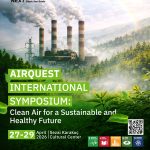




Strategies to be followed in the future to combat air pollution and develop sustainable environmental policies require a multidimensional and interdisciplinary approach. Accelerating the transition to clean energy, transforming transportation systems, raising public awareness, adopting equitable approaches, and supporting scientific research are of great importance in order to improve air quality and protect human health.
Air pollution caused by fossil fuels increases the emission of harmful pollutants, primarily PM2.5 and NO₂, into the atmosphere, leading to millions of premature deaths worldwide and placing a significant economic burden on healthcare systems. According to the World Health Organization (WHO), air pollution is linked to approximately 13 million deaths worldwide each year. Therefore, reducing the use of fossil fuels such as coal, oil, and natural gas and promoting the use of renewable energy sources (such as solar, wind, and geothermal) is a strategic necessity for both combating climate change and protecting public health.
The development and widespread adoption of clean energy technologies offer significant benefits not only for electricity generation but also for the transportation and housing sectors. Alternatives such as electric vehicles, hydrogen-powered vehicles, and e-bikes have lower emission values compared to fossil fuel-powered engines. However, the increase in the number of vehicles has brought particulate matter (especially PM2.5) pollution caused by tire and brake wear to the forefront. Therefore, transportation systems require not only technological transformation but also prioritizing the promotion of public transportation, increasing bicycle lanes, and implementing pedestrian-friendly urban planning.
The transition to clean energy must be carried out in a healthy and fair manner, encompassing not only technological but also social dimensions. Millions of people living in low- and middle-income countries or rural areas still depend on dirty energy sources (wood, dung, coal). Increasing access to clean energy technologies, boosting public support, and investing in infrastructure are essential in these regions. Otherwise, the energy transition process could exacerbate existing inequalities.
Behavioral changes also play a key role in this process. Technologies such as clean cooking technologies and solar water heaters are not only related to technical adequacy but also directly related to user habits. Therefore, social awareness campaigns, education programs, and community-based participation processes should be encouraged.
In addition, strengthening air quality monitoring infrastructure, disseminating low-cost sensors, and establishing real-time data-driven decision-making mechanisms are of great importance. Identifying air pollution “hot spots” in cities enables the development of targeted policies. Furthermore, reducing the air quality guideline values updated by the WHO in 2021 in legislation is essential for both public health and environmental safety.
Another prerequisite for successfully combating air pollution in the future is international cooperation. Since air pollutants do not recognize borders, regional cooperation and joint action plans are of critical importance. In this context, technical capacity sharing, information exchange, and the development of coordinated policies among countries in the Black Sea Basin should be encouraged.
In conclusion, improving air quality and establishing sustainable environmental policies requires multifaceted strategies: transition to clean energy, fair and inclusive transformation policies, technological innovation, support for behavioral changes, establishment of strong governance mechanisms at the local and international levels, and ensuring public participation. Only with this comprehensive approach can the right to clean air be guaranteed for everyone.
Today, energy production and consumption patterns have profound effects on both human health and ecosystems. In particular, fossil fuel-based energy systems are the root cause of many problems such as air pollution, greenhouse gas emissions, and environmental degradation. Therefore, a fundamental transformation of the energy sector is necessary for a sustainable future. The clean energy transition is at the heart of this transformation. Its primary objective is to phase out fossil fuels and promote the widespread adoption of renewable, low-carbon, and environmentally friendly energy sources.
The concept of clean energy transition refers not only to a technical change but also to a comprehensive transformation process with economic, social, and environmental impacts. In this process, renewable energy sources such as solar, wind, hydroelectric, biomass, and geothermal emerge as the most effective ways to produce energy without carbon emissions. With the clean energy transition, pollutant emissions from carbon-intensive energy production systems are significantly reduced, air quality improves, and negative impacts on public health are minimized.
One of the most significant benefits of this transition is that it contributes to the prevention of air pollution, which is particularly prevalent in large cities. Harmful substances such as particulate matter (PM2.5, PM10), nitrogen dioxide (NO₂) and sulfur dioxide (SO₂) produced by the combustion of fossil fuels are the cause of many health problems, primarily respiratory diseases. According to the World Health Organization, air pollution causes millions of premature deaths each year. Clean energy systems minimize these risks, enabling communities to enjoy healthier and more livable environments.
At the same time, clean energy systems create new economic opportunities. The renewable energy sector offers a wide range of employment opportunities, from solar panel production to wind turbine maintenance. This makes the energy transition not only an environmental tool but also a driver of economic development. Especially in terms of youth employment, clean energy investments are a promising sector for the future. Furthermore, investments in energy efficiency help reduce energy costs while providing consumers with more economic solutions.
The transition to clean energy is also of strategic importance in terms of energy supply security. Fossil fuels are often dependent on imports, which can lead to energy security issues. Renewable energy sources, on the other hand, can be produced locally, reducing countries’ dependence on external sources and increasing energy independence. Especially in today’s world, where energy prices fluctuate on a global scale, shifting toward renewable sources is an important step toward supporting economic stability.
However, this transition process is not limited to technological developments. It also includes human dimensions such as ensuring access to energy, enabling all social groups to access clean energy, and preventing energy poverty. Access to clean cooking systems, insulated housing, and energy-efficient appliances for low-income households is crucial for ensuring that this transition is inclusive and fair. Otherwise, the energy transition could exacerbate existing social and economic inequalities.
In this context, public policies and regulatory frameworks that support the clean energy transition are of great importance. Government support, incentive programs, carbon pricing mechanisms, and national energy plans directly influence the pace and success of the transition. Similarly, private sector investments, international collaborations, and civil society initiatives are also integral parts of this process. In particular, strengthening local governments, municipalities, and community-based projects plays a crucial role in the widespread adoption of clean energy solutions.
In conclusion, the transition to clean energy is critical for both environmental sustainability and social justice. This transformation, which has direct implications in many areas such as combating air pollution, mitigating the effects of climate change, protecting human health, and supporting economic development, can be successful when guided by long-term and determined policies. The transition to clean, reliable, and accessible energy is not merely a choice but a fundamental condition for a livable future for humanity.
Today, environmental problems transcend national borders and have reached regional and global dimensions. In particular, environmental problems such as air pollution, which are widespread in nature, are too comprehensive to be solved by the efforts of a single country. Therefore, strengthening regional cooperation has become inevitable in order to develop effective and sustainable solutions. Countries facing common environmental threats can create synergy in environmental management and achieve more effective results by sharing information, experience, and resources.
Cooperation in regions such as the Black Sea Basin, where transboundary environmental impacts are concentrated, is a strategic necessity in terms of environmental security. This is because air pollutants originating in one country affect not only the country of origin but also neighboring countries through wind and atmospheric transport. For example, particulate matter (PM2.5) and nitrogen oxides (NOx) resulting from industrial emissions or agricultural fires can spread to other countries in a short time. Therefore, establishing common standards, coordinated action plans, and monitoring systems at the regional level is of great importance for protecting air quality.
Another advantage of strengthening regional cooperation is that it contributes to data sharing and capacity building processes. Some countries may have limited technical infrastructure, expertise, or financial resources. Sharing experiences with neighbors that have stronger institutional structures helps balance capacity gaps. Joint training programs, technical support mechanisms, and infrastructure projects carried out in this context contribute to reducing environmental inequalities by increasing regional solidarity.
Strong regional cooperation fosters mutual trust not only at the technical level but also at the diplomatic and governance levels. Common environmental policies also contribute to strengthening political and social ties between countries. In this sense, environmental diplomacy is considered a powerful tool for developing peaceful and mutually beneficial solutions to universal problems such as climate change and air pollution.
International and regional institutions such as the European Union, the Black Sea Economic Cooperation Organization (BSEC), the United Nations Environment Programme (UNEP), and the World Health Organization (WHO) play an important role in structuring these cooperation efforts. Additionally, through EU-supported environmental projects, cross-border cooperation programs, and scientific networks, countries in the region can come together around common goals to take steps toward reducing environmental risks.
In conclusion, strengthening regional cooperation enhances both scientific and administrative capacity in the fight against air pollution. Developing common policies, using resources more efficiently, integrating databases, and creating opportunities for mutual learning reinforce the contribution of regional solidarity to environmental sustainability. In this context, countries must act with a sense of responsibility that transcends national borders to protect fragile ecosystems such as the Black Sea and ensure public health. The right to clean air can only be protected through strong and lasting regional cooperation.
Technological investments or legal regulations alone are not sufficient to achieve long-term and sustainable progress in solving environmental problems. The participation of all segments of society as conscious, informed, and responsible individuals in this process is critical to the success of sustainable environmental policies. In this regard, the expansion of educational activities and the support of scientific research are among the most fundamental building blocks of environmental management.
In particular, raising awareness among individuals is of great importance in combating abstract and often difficult-to-detect problems such as air pollution. Environmental education must be integrated into the curriculum in a comprehensive and interdisciplinary manner, starting from preschool through elementary, middle, and high school, and continuing through university. These educational programs should not only foster a love for nature but also comprehensively address the cause-and-effect relationships of environmental issues, their impacts on human health, and potential solutions.
Environmental literacy acquired at an early age enables students to make more informed decisions as they grow older. Raising awareness about environmental issues and encouraging individuals to act responsibly in their daily lives, such as energy conservation, transportation choices, consumption habits, and waste management, are of great importance. At the same time, media literacy and access to digital resources should be strengthened so that young people become not only consumers of information but also producers and sharers of information and defenders of the environment.
Community-based education programs are just as important as formal education. Seminars, workshops, documentary screenings, and field studies organized by municipalities, non-governmental organizations, universities, and public institutions are effective methods for reaching large audiences. Additionally, creating innovative content tailored to different age groups and demographics through new communication tools such as mobile apps, digital games, and social media campaigns enhances the accessibility of environmental education.
In addition to education, supporting scientific research is essential for implementing science-based environmental policies. Academic and applied research in areas such as the widespread use of air quality monitoring systems, the development of low-cost sensor technologies, and the promotion of artificial intelligence-supported modeling studies enable decision-makers to produce more effective policies. Furthermore, source apportionment studies aimed at identifying air pollution sources at the regional level, advanced atmospheric modeling studies, and health impact assessments contribute to a better understanding of the environment-health interaction.
Research centers at universities should encourage interdisciplinary studies and build bridges between engineering, environmental science, health sciences, urban planning, and social sciences. In addition, young researchers should be encouraged to specialize in the field of environment through thesis and project support programs at the graduate level. Developing collaborations with international research networks, as well as national funding mechanisms, increases scientific capacity and provides opportunities to develop joint solutions to common environmental problems.
In this context, it is of great importance to establish strong links between science, society, and politics and to strengthen communication channels that will enable the knowledge produced by academia to reach society and decision-makers. Open data policies, digital information platforms, and decision-making processes based on stakeholder participation should be encouraged in order to develop science-based environmental policies.
In conclusion, education and scientific research form the backbone of environmental management. Thanks to conscious individuals and knowledge-based policies, it is possible to effectively combat complex and multidimensional environmental problems such as air pollution. Ensuring that future generations live in a healthier, more livable, and more sustainable environment is a product of the investments made today in education and science. Therefore, strengthening the education system and supporting scientific research are not merely choices, but a necessity for our common future.
The Black Sea Basin is an environmentally critical region due to its biological diversity, economic potential, and strategic geographical location. However, human-induced factors such as industrialization, urbanization, agricultural activities, and increasing transportation density have led to the emergence of serious environmental issues in this basin. Air pollution, water pollution, loss of biodiversity, and climate change-related impacts are transboundary in nature and exhibit a complex structure that cannot be resolved by the efforts of a single country alone. Therefore, the need for a comprehensive and coordinated “Joint Action Plan” covering all countries bordering the Black Sea is becoming increasingly evident.
The Joint Action Plan is considered a strategic roadmap aimed at planning environmental management among the countries of the region within the framework of common objectives, harmonizing policy implementation, and institutionalizing sharing. At the core of this plan should be the joint action of countries bordering the Black Sea—Türkiye, Bulgaria, Romania, Ukraine, Russia, and Georgia—to address environmental issues through the development of science-based, transparent, and participatory mechanisms.
When it comes to air pollution, the first step of the joint action plan is to establish a common air quality monitoring and reporting system. Data on air pollutants (PM2.5, NO₂, SO₂, O₃, etc.) should be collected across the basin, compared according to regional standards, and shared with the public. To ensure the system operates seamlessly, countries should standardize measurement methods, support low-cost sensor technologies, and develop models integrated with satellite data.
Within the scope of the Joint Action Plan, it is also of great importance to create a regional emissions inventory to control industrial emissions. Pollutant emissions from industrial facilities, power plants, transportation infrastructure, and agricultural activities should be mapped by country and evaluated to cover the entire basin. This will enable the identification of high-risk areas and the establishment of priority intervention zones. Additionally, regional clean energy investments aimed at reducing fossil fuel dependence in energy production should be a key component of this plan.
In addition to air pollution, policies aimed at mitigating the effects of climate change in the Black Sea Basin should also be harmonized. In this context, low-carbon development strategies, the harmonized preparation of greenhouse gas inventories, and the widespread promotion of renewable energy incentives across the region should be supported by a common policy approach. Environmental impacts can be reduced by placing concepts such as the Green Deal, circular economy, and sustainable transportation at the center of regional policies.
The success of the action plan must be reinforced not only by technical and environmental data but also by institutional cooperation. The active participation of the environment ministries, local authorities, universities, civil society organizations, and private sector representatives of the countries bordering the Black Sea is of great importance. Establishing multi-stakeholder platforms to ensure that decision-making processes are transparent, participatory, and accountable will increase the plan’s acceptability and sustainability.
In addition, raising awareness and conducting educational activities among the local population should constitute an important part of the plan. Informing the public about the effects of air pollution, personal measures, and clean energy solutions will contribute to reducing environmental risks through individual behavioral changes. In particular, developing environmental education curricula in schools will contribute to raising awareness among young people about environmental issues.
In conclusion, the Joint Action Plan for the Black Sea Basin is not only a regional environmental policy but also a model for peaceful cooperation. Through this plan, environmental risks can be reduced, human health can be protected, ecosystem services can be made sustainable, and an environment of trust can be built between countries. The future of the Black Sea depends on the joint and decisive steps that countries take today. In this context, an integrated and long-term Joint Action Plan is one of the most effective solutions to the region’s environmental problems.
Air quality is among the top priorities in terms of both human health and environmental sustainability. Factors such as increasing population, dense transportation, industrialization, and energy consumption, especially in large cities, are raising air pollutant levels and directly affecting quality of life. This situation is not limited to urban areas; it has also become a significant issue in rural areas due to agricultural activities and biomass burning. Therefore, efforts to improve air quality must be addressed through a comprehensive, interdisciplinary, and multi-stakeholder approach.
The first step in improving air quality is the collection of accurate and regular data. Modern air quality monitoring systems provide hourly or real-time measurements of key pollutants such as PM2.5, PM10, NO₂, SO₂, and O₃ in the atmosphere, offering critical information for decision-makers. This data can be obtained not only from official stations but also from low-cost sensors, mobile measurement devices, and satellite-based monitoring systems. Sharing the data obtained on open access platforms increases transparency and raises public awareness.
Another important area of application is the implementation of sectoral measures to reduce pollutant sources. In particular, promoting electric vehicles as an alternative to internal combustion engines in the transportation sector, strengthening public transportation infrastructure, and popularizing environmentally friendly transportation vehicles such as bicycles directly contribute to improving air quality. The implementation of low emission standards such as Euro 6 and the effective monitoring of vehicle emission tests also enhance the effectiveness of these measures.
Controlling industrial emissions also plays a decisive role in protecting air quality. Flue gas filter systems, electrostatic precipitators, bag filters, and gas scrubbers used in industrial facilities can significantly reduce particulate matter and gases released into the air. Additionally, modernizing combustion technologies, using low-sulfur fuels, and promoting energy efficiency measures are fundamental steps in limiting emissions.
Fossil fuels used for heating can seriously impair urban air quality, especially during winter months. Therefore, improving the quality of fuels used in residential buildings, expanding the use of central heating systems, and promoting low-emission sources are important measures. The use of alternative energy sources—particularly solar, wind, and geothermal—can be expanded for both individual and collective use to reduce air pollutant emissions.
Activities that negatively affect air quality in agricultural practices must also be restricted. Practices such as stubble burning reduce agricultural productivity and cause particulate matter emissions that spread over large areas. Banning such practices and adopting sustainable methods such as biogas and composting contribute to environmentally friendly agriculture.
Additionally, increasing green spaces in urban planning and promoting vegetation that acts as a natural filter to improve air quality is also important. Trees and green spaces not only absorb carbon but also filter air pollutants, making the urban environment more livable. In this context, urban forestry, vertical gardens, and green roofs should be supported.
Raising public awareness is an integral part of this process. Educational campaigns, media content, digital games, and mobile applications aimed at raising awareness of air quality can be effective in transforming individual behavior. Individual measures taken by the public against air pollution—such as carpooling, energy conservation, or the use of air filtration systems at home—can have a cumulative impact.
In conclusion, measures to improve air quality can only be achieved through the strengthening of technical infrastructure, sectoral regulations, individual awareness, and the comprehensive adoption of green transformation. Combating air pollution is not merely an environmental policy but also a public health, urban planning, and climate policy. Therefore, every step taken to improve air quality is a strategic investment that contributes to enhancing quality of life and building a sustainable future.